Workshop Spotlights - Conference 2026
Speaker Spotlight | Ingrid Vanderstoep

What makes narration so powerful?
In “Narration – A Spell to Make Hidden Things Visible,” Charlotte Mason educator and homeschooling mother Ingrid Vanderstoep explores how the simple practice of asking a child to tell develops attention, memory, understanding and expression.
Drawing on 18 years of homeschooling, Ingrid will offer a practical introduction to what narration is, how to use it, and why it is so formative.
Speaker Spotlight | Helen Koutroulis

What does it mean to educate the whole person?
With more than forty years in education, Helen Koutroulis brings a wealth of experience to the recovery of paideia—education understood not simply as the acquisition of knowledge, but as the formation of the human person.
In her workshop, “Socratic Method as Paideia,” Helen explores how Socratic inquiry can cultivate intellectual virtue, character and a disposition towards truth.
A former Head of College and experienced teacher, curriculum leader and mentor, Helen is now a Board Director of St John of Kronstadt Academy, where she is leading work to re-envision the Australian Curriculum through the principles of Orthodox Christian classical education.
Speaker Spotlight | Sr. Joanna Marie CollinsO.P.
Speaker Spotlight | Sr. Joanna Marie CollinsO.P.
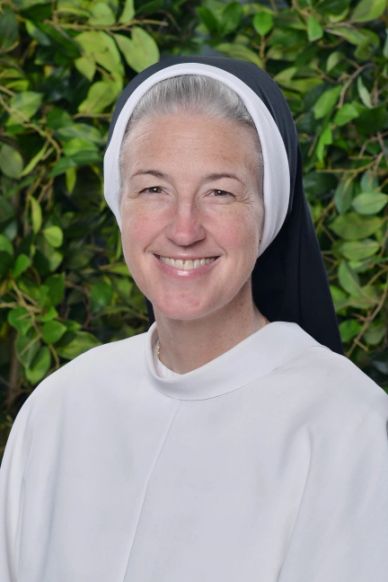
Can Montessori provide a foundation for Liberal Arts education?
In “Montessori Stories – Early Years Liberal Arts Learning,” Sr Joanna Marie Collins, O.P. explores how Montessori pedagogy can provide a rich foundation for the Liberal Arts in the early primary years.
Drawing on more than two decades of teaching experience, Sr Joanna will share practical ways to cultivate wonder, independence and intellectual formation in our youngest learners.
Speaker Spotlight | David Cooper
Speaker Spotlight | Chris McCumstie
Speaker Spotlight | David Cooper
What does a hand-crafted wooden bucket have in common with an autonomous search-and-rescue drone?
Perhaps more than we might think.
The high school Technologies classroom may sul through making.
Consider the patience and quiet satisfaction of a Year 10 student crafting a traditional wooden bucket with 200-year-old hand tools. Or the growing love of geometry and logic as another watches an autonomous search-and-rescue drone successfully deliver a care package—knowing the mathematical reasoning that made its flight possible.
Can the Technologies classroom participate fully in Liberal Arts renewal?
This presentation explores how thoughtful curriculum selection and pedagogy can transform Technologies from a merely utilitarian subject into a place of craftsmanship, intellectual formation, embodied knowledge and genuine human flourishing.
Come and discover how the Technologies classroom might contribute to the culture we are seeking to renew in our schools.eem an unlikely place to encounter the Liberal Arts tradition yet we find extraordinary opportunities for students to experience the true, the good and the beautiful.
Speaker Spotlight | Conor Ross
Speaker Spotlight | Chris McCumstie
Speaker Spotlight | David Cooper
Are our assessment systems measuring education or distorting it?
When students become preoccupied with percentages, rankings and grades, assessment can begin to overshadow the very fruits education is meant to cultivate.
Join Conor Ross for a practical and provocative workshop exploring a more authentically human approach to assessment. Guided by classical thinkers ancient and modern, Conor will lead participants out of what he calls the “Industrial-Assessment-Grading-Complex” and towards approaches grounded in a richer understanding of education—including the classical concept of leisure.
Participants will explore the philosophical assumptions behind modern assessment, practical classical alternatives, institutionally recognised pathways such as the Classical Learning Test, and ways to rethink assessment in an age of AI.
Conor is a Melbourne-based secondary teacher and co-founder of the Chesterton Academy of Melbourne, Victoria’s first classical liberal arts P–12 school, planned to launch in 2028. Drawing on his own classroom practice and his recent experience at the Chesterton Schools Summit at Ave Maria University in Florida, he brings both practical experience and an international perspective to the conversation.
Come prepared to reconsider what assessment is actually for.
Speaker Spotlight | Chris McCumstie
Speaker Spotlight | Chris McCumstie
Speaker Spotlight | Chris McCumstie
What is worthy of our students’ attention?
We are living through an attention crisis. Distraction is increasingly shaping not only how young people spend their time, but how they read, learn, think and encounter the world.
In Scholé & Attention, teacher and school leader Chris McCumstie explores the classical ideal of scholé—not simply as “leisure”, but as an atmosphere, disposition and way of approaching education.
What might change if our schools were deliberately ordered towards attention?
Chris will explore practical choices in school structures, classroom environments, curriculum and pedagogy that can help students encounter things genuinely worthy of their attention—and form them as deep readers, thoughtful responders and people capable of contemplation.
Chris has worked in Catholic and independent schools across Victoria and Queensland and has been involved in Classical Education initiatives for a number of years. He is a sessional lecturer in Religious Education at Campion College and, in 2026, launched Southern Light, providing community, formation and resources for parents and educators.
In a culture competing relentlessly for our students’ attention, education might begin by teaching them where to look.
Education for Human Flourishing Conference 2026
Speaker Spotlight | Dr. Jeff Lehman
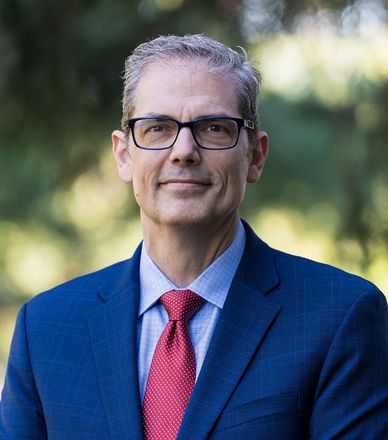
Dr. Jeffrey Lehman is currently the Director of Masters in Catholic Education program at the Augustine Institute, Missouri. He previously led program development in University of Dallas Masters in Classical education programs and has taught at Biola and Hillsdale universities. Dr. Lehman will share a philosophical history of Liberal Arts education with a particular focus on human anthropology through the eyes of the Catholic intellectual tradition.
Speaker Spotlight | Dr. Chris Schlect
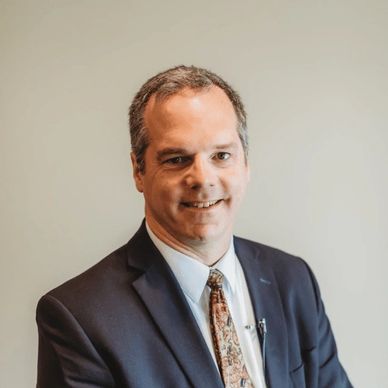
Dr Chris Schlect is Head of Humanities and Director of the graduate program in Classical and Christian Studies at New Saint Andrews College. With more than thirty years' experience in classical education, he teaches history, classical rhetoric, and education, and has also served on the faculties of Washington State University and Gordon College.
A recognised leader in the classical education renewal movement, Dr Schlect chairs the ACCS Accreditation Commission and works extensively with schools across the United States through accreditation, consulting, and teacher formation.
Speaker Spotlight | Joelle Hodge
Speaker Spotlight | Joelle Hodge
What if hospitality is not simply something we offer—but something essential to how we educate?
We often think of hospitality in terms of welcoming someone into our homes. But within the Christian and classical traditions, hospitality reaches much further: it is the practice of making room for another person.
Returning to Australia for the Education for Human Flourishing Conference, Joelle Hodge will explore hospitality as a vital part of the culture of classical education—one that creates the conditions for genuine encounter, conversation and the pursuit of truth.
What might it mean to make room for one another in our schools? For a leader to make room for teachers; a teacher for students; students for one another—and all of us for the truth we are seeking together?
Drawing upon the Christian tradition and her extensive experience in classical education, Joelle invites us to consider how the practice of hospitality can help create communities in which people are genuinely known, welcomed and formed.
Join Joelle in Sydney this September for two rich days of conversation, community and the pursuit of an education ordered towards human flourishing.